

Works
Work Details

Elseware

Helps financial institutions assess operational risks through structured scenarios and exposure-based models.
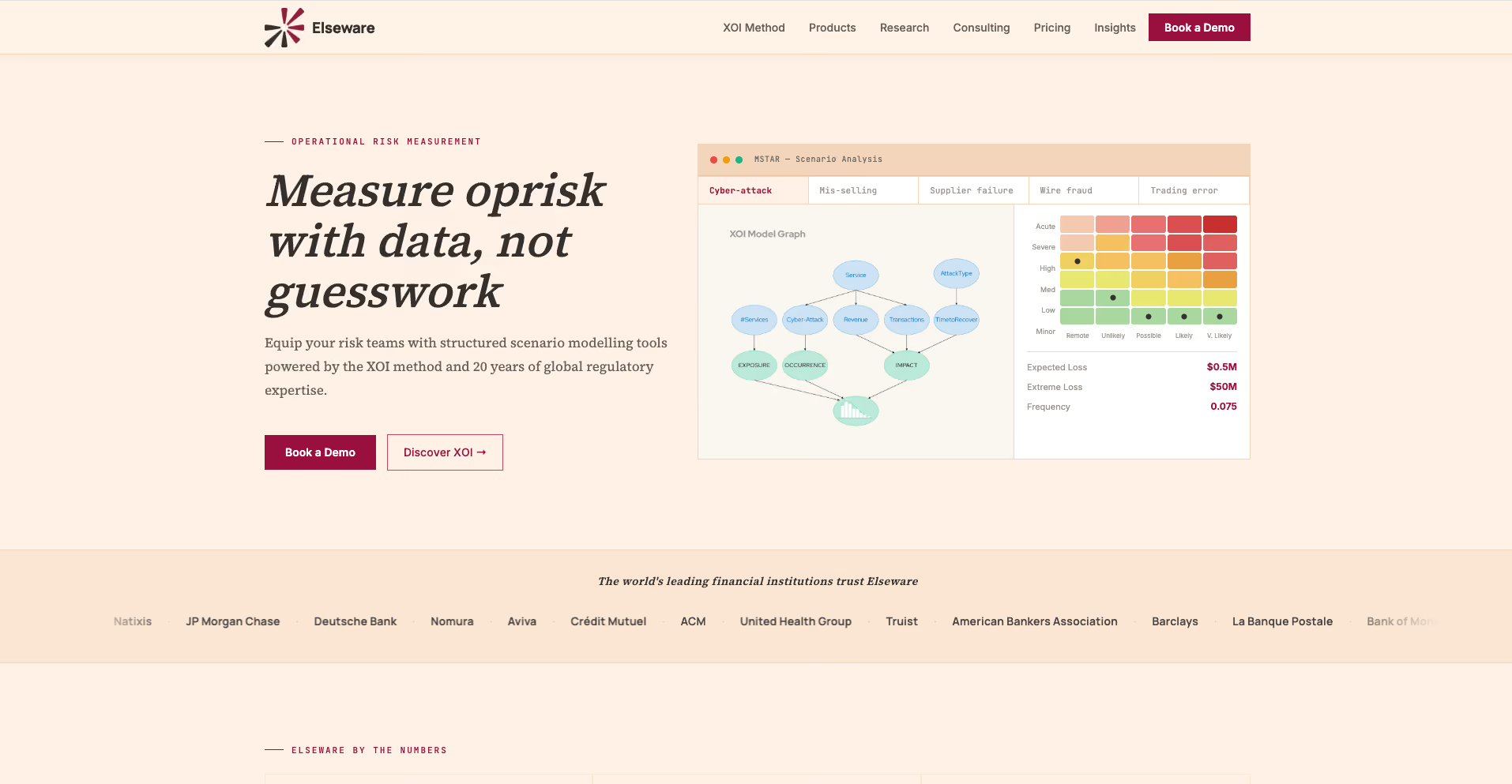
Screenshot from the OpNest website, the all-in-one digital agency platform built for the case study

The Challenge

Elseware needed a case-study page that could make a genuinely technical discipline, operational risk quantification, credible to two very different audiences at once: risk practitioners who already know the jargon, and executives who need to understand why a 30-year-old, regulator-approved methodology matters. The firm's core asset, the XOI (Exposure-Occurrence-Impact) method, had to read as rigorous enough for regulatory submission and clear enough that a non-specialist could grasp the logic in a few sentences.

The Approach

The page organizes Elseware's offering into three connected pillars: MSTAR, the software that designs and simulates risk scenarios; applied research, the academic and regulatory grounding behind the XOI method; and consulting, the hands-on engagement that takes a client from scenario design through regulatory approval. Rather than leading with technical jargon, each pillar is anchored to a concrete regulatory context, CCAR, ICAAP, TCFD, so a risk officer can immediately place the offering within a framework they already report against.

Translating a Regulatory Methodology Into Plain Business Terms

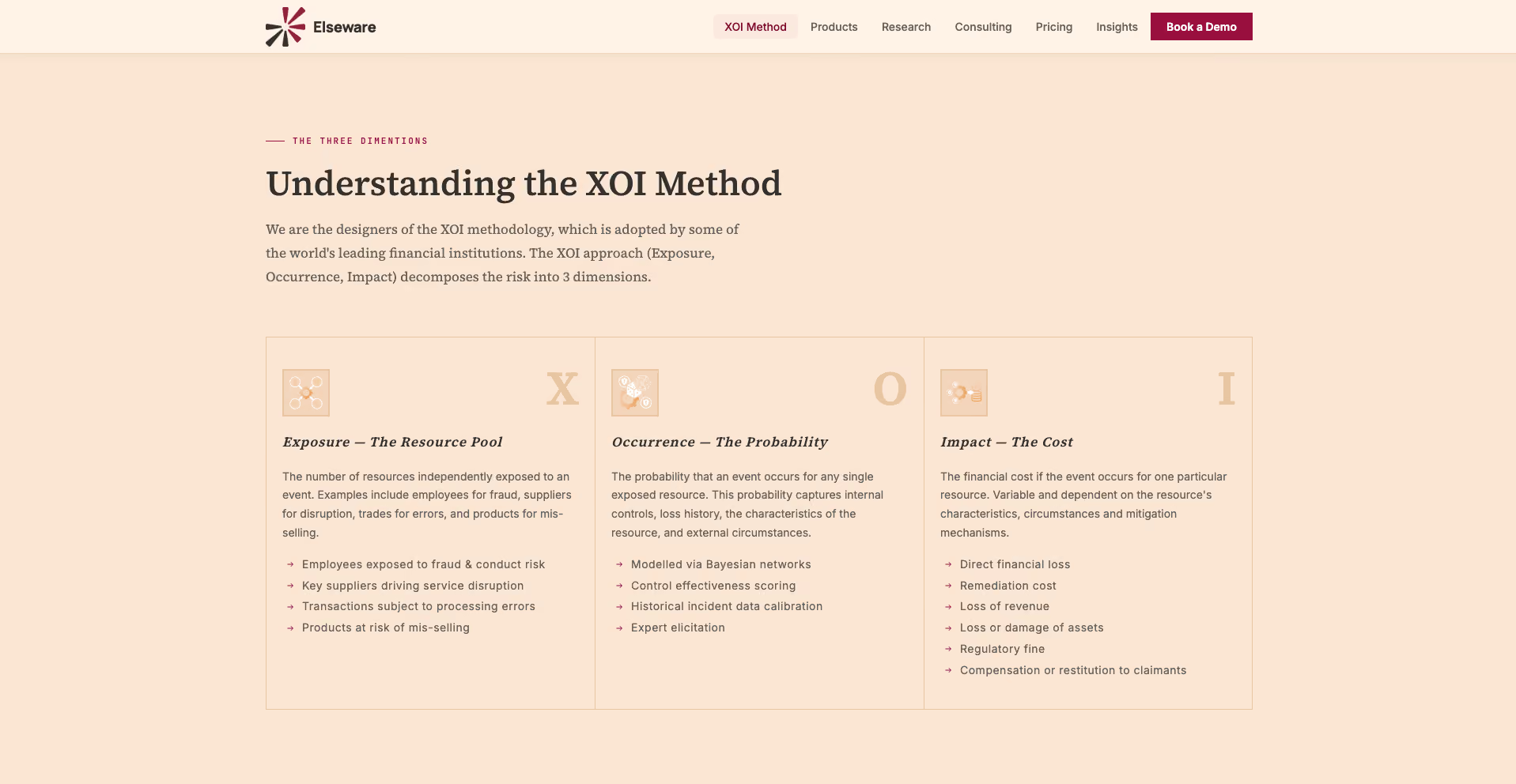
The biggest communication risk was letting operational risk jargon obscure what XOI actually does. The page handles this by defining XOI's exposure measure in business terms, the number of resources independently exposed to an event, employees for fraud, suppliers for disruption, trades for errors, rather than staying in abstract statistical language, so a reader without a quant background can still follow the logic.

Building Trust Through Three Decades and Named Regulatory Wins

Because operational risk models require regulatory sign-off, the page leans on Elseware's track record, operating since 1993, a Risk.net Award in 2020, and regulatory approvals across the UK, US, and EU, rather than abstract claims of expertise. Repeating the same three jurisdictions across products, research, and consulting reinforces one credibility signal instead of introducing a new claim in each section.

The Process

Problem, Meet Solution

01
The Problem

Operational risk quantification is a technical discipline that can easily read as impenetrable jargon to non-specialist readers.

→
The Solution

Define the core XOI exposure measure in plain business terms, tied to concrete examples like employees, suppliers, and trades, rather than statistical abstraction.

02
The Problem

Elseware offers software, research, and consulting as three separate lines, which could read as three unrelated businesses.

→
The Solution

Anchor all three to the same XOI method and the same regulatory contexts, CCAR, ICAAP, TCFD, so they read as one coherent practice.

03
The Problem

A risk model used for regulatory submission has to prove it has actually been approved by real regulators, not just theoretically sound.

→
The Solution

State specific, named regulatory wins, approvals across the UK, US, and EU, and a Risk.net Award, rather than a general claim of expertise.

04
The Problem

Climate risk is a newer, less standardized area compared to established operational risk categories like fraud or cyber.

→
The Solution

Extend the same structured, scenario-based XOI framework to climate risk, aligned to TCFD and ECB guidelines, so it reads as proven methodology rather than a separate, untested offering.

05
The Problem

Visitors range from a risk analyst evaluating software to a CRO considering a multi-year consulting engagement.

→
The Solution

Offer entry points at every level, a trial license for MSTAR Desktop, published research, and a direct consultation booking, so each visitor type has a fitting next step.

The Central Challenge
Elseware sells a level of methodological rigor, XOI, Bayesian networks, Monte Carlo simulation, that most buyers cannot independently evaluate. The design challenge was building trust through 30 years of track record and named regulatory approvals rather than asking readers to take the underlying statistics on faith.

The Ecosystem

One Method. Three Ways to Apply It.

01

MSTAR Desktop

The core software for designing and simulating operational risk scenarios, with built-in export to Python, R, and Matlab.

02

MSTAR Platform

A curated library of 40+ operational risk scenarios with a dynamic dashboard, real-world news feed, and benchmark comparisons.

03

Applied Research

Academic and regulatory research underpinning the XOI method, covering operational, climate, and ESG risk.

04

Operational Risk Consulting

Structured scenario design and quantification support for fraud, cyber, legal, conduct, and disruption risk, built for CCAR, ICAAP, and AMA submissions.

05

Climate Risk Framework

A scenario-based approach to quantifying climate impacts on assets and liabilities, aligned with TCFD and ECB guidelines.

06

Insurance Programme Optimization

Scenario mapping, deductible structuring, and limits analysis to tailor insurance programmes to a firm's actual risk profile.

A second screenshot from the OpNest website showing more of the platform's interface

Guiding Risk Teams Toward the Right Engagement

The page offers distinct entry points depending on where a visitor sits: request the MSTAR Desktop trial license to evaluate the software directly, read the published research to understand the methodology, or book a consultation to scope a full engagement. Because all three paths run through the same XOI method, a visitor doesn't need to have already decided between software and consulting before reaching out.

Working With the Elseware Team

This case study reflects Elseware's own positioning as operational risk measurement experts since 1993, inventors of the XOI method, with offices in Paris, New York, and London. Structuring the page around the same three pillars, products, research, consulting, made it possible to add new scenario types and regulatory contexts, like the climate risk framework, without rebuilding the page from scratch.

The Result

The finished page presents a genuinely technical risk-quantification methodology as something both a specialist and a non-specialist can evaluate: what XOI measures, how it has been approved by regulators across three jurisdictions, and which of three engagement paths, software, research, or consulting, fits a given need.